From the Lab Bench to Skin Innovation:
The Story of Dr. Albert Dashi and the Making of Sequential
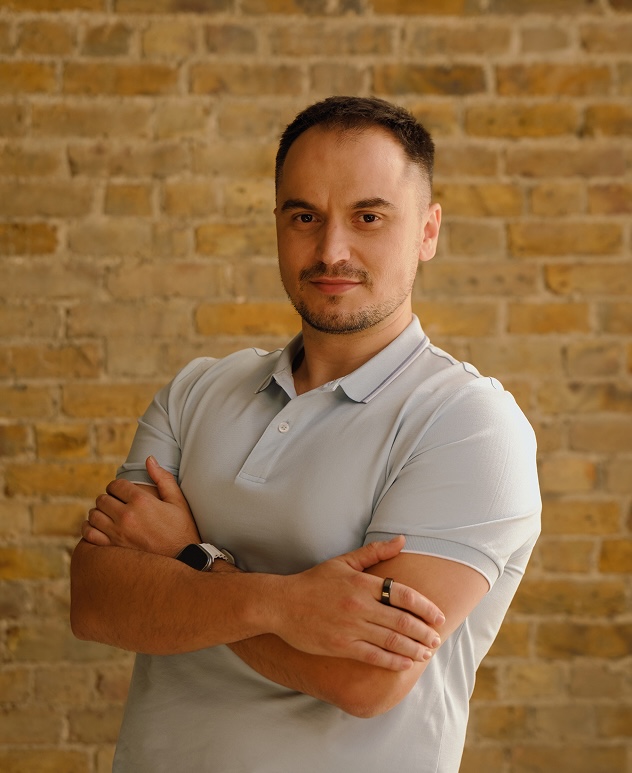
When speaking with Dr. Albert Dashi, co-founder of the skin microbiome company Sequential, it becomes immediately clear that his journey is more than a career transition; it is a story built on conviction, resilience, and a belief that science should reach everyone and everywhere. His life in academia began traditionally: a PhD in Singapore, years of research in molecular genetics and stem cells, and the expectation of a future shaped by postdocs and professorships. Yet as he delved deeper into scientific discovery, he began to notice something troubling. The very knowledge he devoted his life to was powerful but largely inaccessible to the public.
“We are so closed in our cubicles,” he said. “We discover so much, yet we struggle to explain our work, even to our own families.” It was a realization that stayed with him. If science stayed locked inside academic journals, it would never fulfill its purpose. This desire to bring scientific understanding into everyday life marked the earliest beginnings of Sequential.
The company’s concept originally centered on a home-use patch capable of capturing both human and microbiome biomarkers for health measurements. It was simple in theory, elegant in design, and highly feasible from a research perspective. But when they began testing it with real users, the gap between lab simplicity and public understanding became startlingly clear. “Even something like swabbing can be confusing,” Albert recalled with familiar amusement. “You think it’s intuitive, but then you get back samples, and you're surprised at how people use it.”
This early discovery reshaped Sequential’s strategy. Rather than educating millions of consumers on procedures that researchers take for granted, Albert and his co-founder pivoted to working with major personal care and cosmetic companies that already understood the consumer landscape. Sequential would remain rooted in rigorous science, while industry partners would handle communication and outreach. The mission stayed the same, bringing trusted scientific insights to the public, but the path evolved.
The shift proved timely. The pandemic altered how people think about their health, their skin, and their trust in scientific information. As Albert describes it, “We don’t have influencers because they do not drive us. We’re driven by science. So the value that we have is the science part. But why we are saying this is because consumers are becoming very smart now, especially post-pandemic.” People no longer wanted glossy promises; they wanted evidence, clarity, and transparency. Sequential’s data-driven approach positioned them precisely where the industry was heading.
But behind every polished company story lies a far more difficult and human beginning. Sequential was born in the early days of COVID-19, when the world shut down, funding possibilities dwindled, and Singapore’s strict visa rules placed immense pressure on foreign researchers. With no outside investors, Albert and his co-founder poured nearly everything they had into keeping the company alive, close to USD 200,000 in personal savings. They paid the team, covered rent, and navigated visa stress that sometimes left Albert exiting and re-entering the country just to maintain his legal status.
Then came one of the moments Albert remembers most vividly: an investor who decided to believe in them. “You know when you believe somebody that you don’t know? It’s not like you ask money from family. That’s just something very revealing for us.” That simple “yes” from someone with no personal connection to them became the turning point. “So that was the crazy moment, I would say, that changed our lives fully. The money was running low, and I could not afford to stay in Singapore anymore. At the time, my fianceé Suzana (today my wife, who also lived in Singapore with me) and I were about to go back to Switzerland. I would just take a postdoc position, and that was it. We left our apartment. We were about to go. We went for two weeks in an Airbnb, ready to go. But we got the investment on that two weeks at our Airbnb. That was crazy.” Sequential was accepted into IndieBio, one of the world’s most respected biotech accelerators, and received USD 500,000 in funding. For Albert, the significance went beyond capital; it was proof that their vision stretched beyond the boundaries of their immediate scientific circles.
The accelerator provided intensive business training tailored specifically for scientists, helping them transform raw scientific insight into a viable company structure. Months later, a virtual demo day led to additional seed investments totaling USD 2.4 million. The momentum had begun.
Looking back, Albert highlights a theme that came up repeatedly in his entrepreneurial experience: the importance of choosing the right partners. “Which may be something that can come later in terms of question, but” he said thoughtfully, “is really spending time to find your founding teams. Spend time to research them. I cannot emphasize how important… I was lucky that I was with Oliver, our CEO.” Coming from a background deeply rooted in academia, he was unprepared for the financial, operational, and strategic demands of building a company. “But in terms of entrepreneurship, I think you really spend the time to find, if you're a scientist, find a commercial director. Find a financial individual, somebody who knows the money, because scientists don't know the money. But if you want to really penetrate, develop something cool, CEO, CFO, and CSO are the three divisions.”
Another lesson Albert learned, and now often shares with young researchers, is the importance of communicating science simply. “So as a scientist, we explain all these terms, we go to conferences, but if you don’t know how to explain it to your grandma, forget about it. You’re not a master.” To him, clarity is not a simplification of science but an expansion of its reach. The challenge is not making research sound impressive; it is making it understandable enough to matter.
Today, Sequential has reached a pivotal stage in its growth, moving beyond its origins as a testing platform and entering the therapeutic space. Leveraging its proprietary AI-driven technology, the company is now pursuing therapeutic applications focused on skin health, marking an important new phase in its long-term vision.
The company operates laboratories in Singapore, the UK, and the US, steadily building the scientific and clinical foundation required to move closer to this therapeutic focus. Whether the future holds major partnerships, a strategic acquisition, or a long-term independent path, Albert welcomes all possibilities that support the company’s mission.
His journey is a powerful reminder that science can leave the lab and enter people’s daily lives, but only when someone is willing to bridge the gap. Albert’s story reflects the courage it takes to question traditional paths, the humility required to learn new disciplines, and the determination necessary to bring complex science to the world in a way people can understand and trust.
For the young scientists who may be quietly dreaming of entrepreneurship, his message is simple: you don’t have to wait for permission, but you do need the right people beside you, and you need to believe deeply in the impact your knowledge can create. Sequential’s journey, from two scientists in Singapore to a company shaping the future of skin microbiome therapeutics, is proof of what can happen when rigorous science meets resilience, vision, and purpose.