

Artificial intelligence continues to reshape modern medicine, especially in fields where fast and accurate diagnosis is critical for saving lives. One of the most promising advancements is the development of diagnostic AI models capable of analysing medical images and distinguishing between multiple lung diseases that often share overlapping symptoms and radiological features.
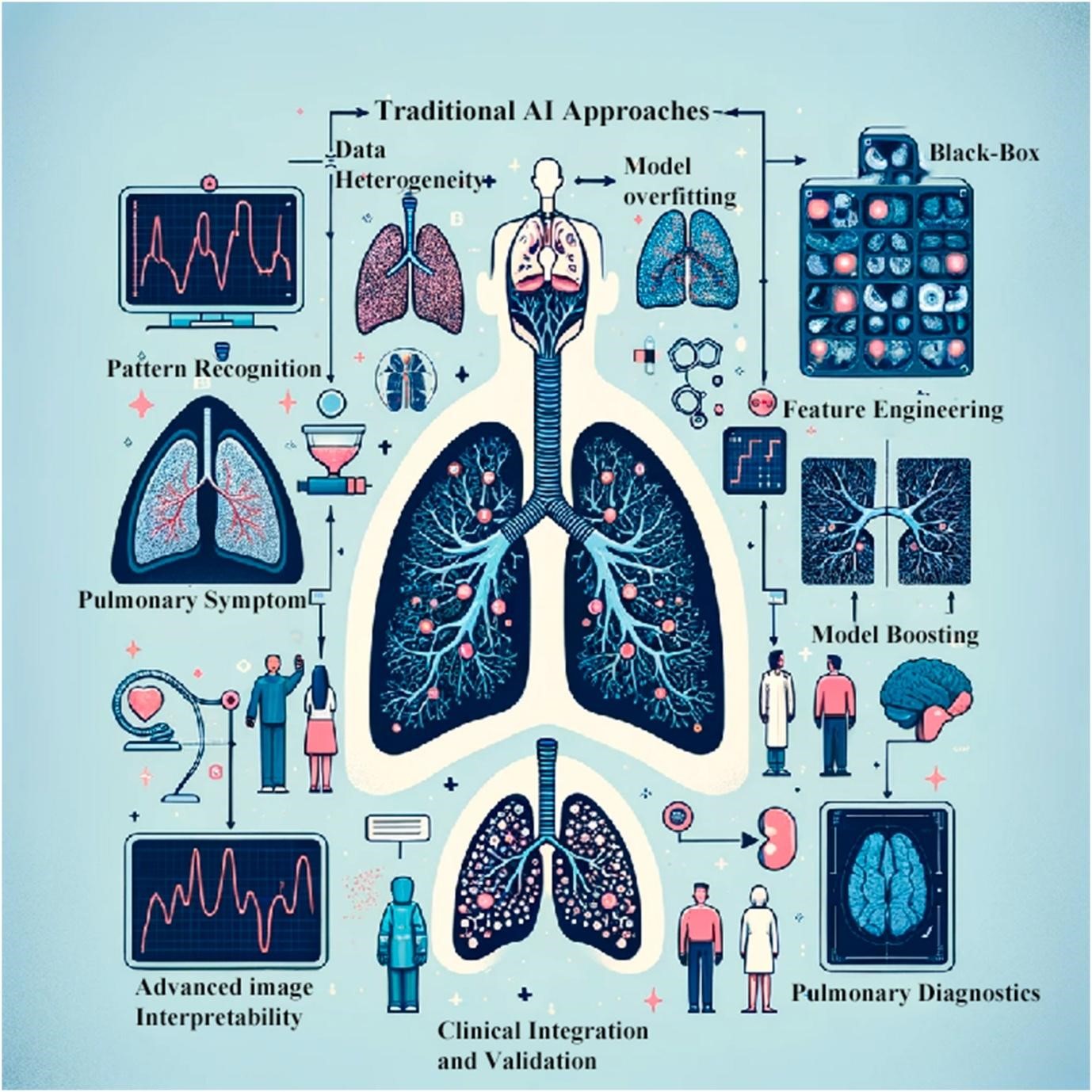
Recently, researchers from Australia and Bangladesh introduced LungNet, a hybrid AI model designed to differentiate between pneumonia, COVID-19, and influenza using medical imaging [2].
Millions of people worldwide are affected each year by pulmonary diseases such as:
• COVID-19
• Bacterial pneumonia
• Viral pneumonia
• Tuberculosis (TB)
• Influenza (flu)
Chest X-rays (CXR) remain one of the most accessible tools for diagnosis. However, they are notoriously difficult to interpret because many diseases present with overlapping patterns, ground-glass opacities, consolidations, cavitary lesions, and more. Even expert radiologists face challenges, especially in emergency settings where time is crucial. This is where AI comes in.
LungNet: AI That “Remembers” Signs of Disease
LungNet introduces a hybrid architecture that combines:
• Convolutional Neural Networks (CNNs) – to detect subtle features in lung scan
• Long Short-Term Memory (LSTM) networks – to “remember” what it saw in previous images of the same lung
Instead of analyzing just one scan, LungNet interprets multiple ultrasound images, storing key features and ignoring irrelevant information. This enables it to build a more complete picture of abnormalities. LungNet can achieve 96.57% Accuracy.
Compared to other lung-disease AI systems (83%–92% accuracy), LungNet stands out. It accurately identifies pneumonia and COVID-19 in over 96% of cases and can justify its predictions using built-in explainability features.
References:
1. Chen et al., “Exploring Explainable AI Features in the Vocal Biomarkers of Lung Disease”.
2. Adrianna Nine: LungNet can reportedly tell the difference between pneumonia, COVID-19, and the flu