
Beyond the Classroom:
How Dr. Anja Krättli is Inspiring the Next Generation of Scientists
What if science education didn’t begin with textbooks, but with curiosity? What if children learned biology not by memorizing definitions, but by exploring concepts and models, asking bold questions, and building ideas together?
For Dr. Anja Krättli, this vision is already becoming reality.
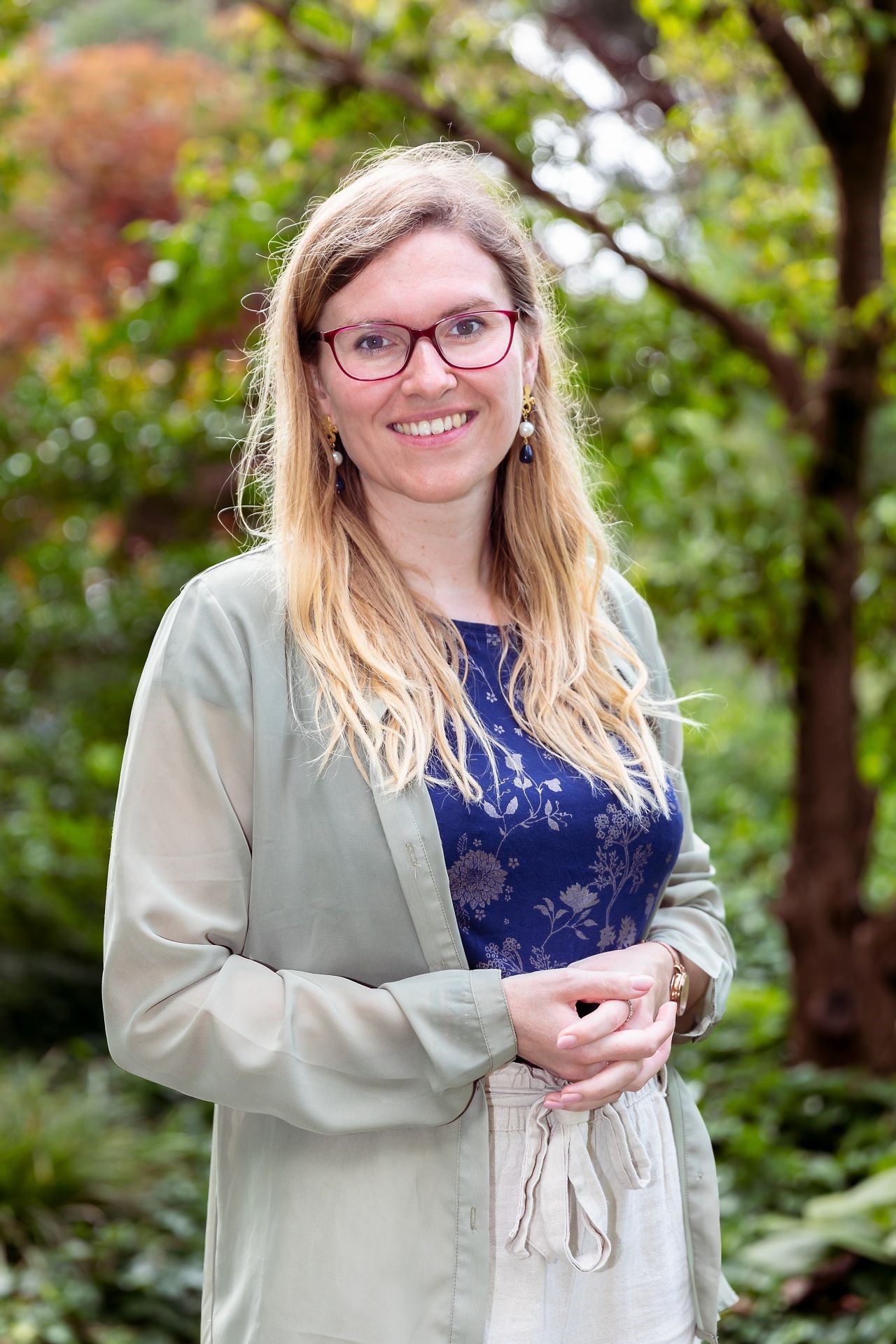
With a background in translational cancer biology and years of scientific research, Dr. Krättli has moved beyond the traditional boundaries of academia to create learning experiences that make science feel alive, human, and accessible. Today, she combines her work as an Expert Scientific Teacher at Novartis/aprentas with her role as Head of Science at Pestalozzi Schulcamps, where she helps shape immersive educational programs for young people from different cultures and backgrounds.
Her journey reflects a growing shift in science education: away from passive learning and toward discovery-driven experiences that inspire confidence, creativity, and connection.
Science Beyond the Classroom
At Pestalozzi Schulcamps, science is not confined to desks or worksheets. Instead, students experiment outdoors, collaborate across cultures, and explore scientific concepts through direct experience. For Dr. Krättli, this hands-on approach changes the way children perceive science entirely.
“Science becomes something they can see, touch, question, and shape themselves.”
Rather than viewing science as something reserved for top-performing students, children begin to see it as something personal and approachable. Students who may struggle in conventional classrooms often discover new confidence when learning through experimentation, teamwork, and exploration.
According to Dr. Krättli, some of the most powerful moments happen when children suddenly realize they can think like scientists.
“That realization is powerful,” she explains“because it builds confidence alongside knowledge.”
Curiosity Comes Before Confidence
One of the biggest challenges in science education is helping students who do not initially identify as “science-oriented.” Dr. Krättli approaches this by shifting the focus away from grades or correct answers and toward curiosity itself.
Instead of beginning with theory, students are encouraged to ask questions, test ideas, build models, and discover concepts through play and interaction.
“We create spaces where exploration feels safe,” she says. “Children ask extraordinary questions, bold creative questions that force even us as scientists to rethink familiar concepts.”
Importantly, the programs are designed with multiple entry points. Some students connect through storytelling, others through movement, creativity, teamwork, or problem-solving. This flexibility allows children with different personalities and learning styles to find their own connection to science.
And sometimes, that connection can be transformative. One moment that stayed with Dr. Krättli was when a student admitted: “I thought I never liked science, but here I discovered I’m actually good at it.”
For her, these moments represent something much bigger than academic achievement. They reveal how education can reshape a child’s understanding of their own potential.
When Science Meets Intercultural Exchange
A unique aspect of Pestalozzi Schulcamps is its international environment, bringing together young people from different countries and cultures. Dr. Krättli believes this diversity strengthens scientific thinking itself.
Students naturally approach challenges from different perspectives; some analytically, others creatively or collaboratively. When these viewpoints meet, innovation often emerges through discussion and shared problem-solving.
One of the most rewarding dynamics she observes is peer-to-peer learning. Children quickly step into teaching roles within their groups, helping each other understand concepts in intuitive and relatable ways.
“Teaching becomes a powerful form of learning itself,” she explains.
Beyond science, these interactions help students develop empathy, communication skills, and the ability to collaborate across differences; qualities that are increasingly essential in addressing global challenges.
The Questions Adults Forget to Ask
Working closely with children has also changed Dr. Krättli’s own perspective as a scientist. She says children constantly remind her that curiosity is one of the purest forms of intelligence.
“They ask the questions adults stop asking,” she explains.
Their willingness to wonder, challenge assumptions, and explore unconventional ideas often pushes scientific conversations in unexpected directions. In many cases, students notice details or possibilities that adults overlook entirely.
She has also witnessed how a single successful experience can dramatically shift a child’s self-confidence:
A quiet student volunteering to lead an experiment.
A hesitant learner suddenly speaking up.
A child realizing they are capable after believing they were “not scientific.”
"These moments can appear very small from the outside, but they are deeply significant.” she says, “Sometimes all it takes is one successful experience for a child to begin rewriting the story they tell themselves about who they are.”
Translating Complexity into Wonder
Coming from a background in translational cancer research, Dr. Krättli understands the complexity of science deeply. But teaching children, she says, requires a fundamentally different mindset.
“In research, we communicate through precision, technical language and details” she explains. “With children, you begin with imagination, meaning, and connection.”
For her, effective science communication is not about oversimplifying ideas. It is about preserving scientific integrity while making concepts tangible and emotionally engaging. And in many ways, she says, children make scientists better communicators.
“They force you to strip away unnecessary complexity and focus on the essence of an idea.”
Inspiring the Next Generation of Thinkers
At the intersection of research, education, and intercultural collaboration, Dr. Anja Krättli represents a new kind of scientific leadership; one that values curiosity as much as expertise. Her work reminds us that science education is not simply about transferring knowledge. It is about helping young people develop confidence, empathy, creativity, and the courage to ask questions.
Because sometimes, all it takes is one moment of discovery for a child to realize that science is not something distant or unreachable. It is something they already belong to.
Learn more about pestalozzischulcamps at www.pestalozzischulcamps.ch