
As autumn approaches and temperatures begin to fall, attention turns once again to seasonal respiratory infections. Among them, influenza remains one of the most important causes of illness during the colder months. Influenza viruses circulate throughout the year, but in temperate regions they typically cause seasonal epidemics during autumn and winter. In the Northern Hemisphere, influenza activity generally increases from autumn and can continue into the following spring.
The arrival of the flu season is therefore an important opportunity to understand how influenza spreads, recognize its symptoms, and take preventive measures before respiratory viruses become more widespread. The virus spreads mainly through respiratory particles released when an infected person coughs, sneezes, talks, or breathes. Transmission can also occur through contaminated hands and surfaces. Several factors can contribute to increased transmission during the colder months.
People generally spend more time indoors, where ventilation may be limited and close contact with other people is more common. Schools, workplaces, public transport, and other shared indoor environments can therefore provide opportunities for respiratory viruses to spread. Seasonal influenza patterns are not identical every year. The timing and intensity of influenza activity can vary, and different influenza viruses can circulate simultaneously. This makes continuous surveillance important for understanding how influenza is evolving and which viruses are circulating in a population.
Recognizing influenza symptoms
Influenza can cause a range of symptoms, often appearing relatively suddenly. Common symptoms include fever, cough, sore throat, headache, muscle and joint pain, fatigue, and a runny or stuffy nose. Some people, particularly children, may also experience gastrointestinal symptoms. The symptoms of influenza can overlap with those caused by other respiratory viruses, including respiratory syncytial virus (RSV) and SARS-CoV-2. Because symptoms alone cannot always distinguish between these infections, laboratory testing may be useful in certain clinical situations.
For most otherwise healthy people, influenza is an unpleasant but self-limiting illness, and recovery usually occurs within about a week. However, the infection can sometimes lead to complications or severe disease. Older adults, young children, pregnant women, people with certain chronic medical conditions, and people with weakened immune systems. Healthcare workers and people who have frequent contact with vulnerable individuals may also be an important focus of seasonal influenza prevention programmes.
Complications can include pneumonia and worsening of existing medical conditions. During periods of high influenza activity, large numbers of people becoming ill at the same time can also place additional pressure on healthcare services. This is why preparing for influenza season is not only an individual health issue but also an important part of protecting vulnerable members of the community.
Vaccination: Preparing before the season begins
Vaccination remains the most important measure for reducing the risk of influenza and its complications. Influenza viruses continuously evolve, and the viruses circulating from one season to another can differ. For this reason, seasonal influenza vaccines are regularly updated based on global surveillance and recommendations from the World Health Organization.
Protection does not develop immediately after vaccination. It generally takes around two weeks for the immune response to develop. For this reason, vaccination is usually offered before influenza activity becomes widespread. Vaccination does not guarantee that a person will never become infected. However, it can reduce the risk of influenza and, importantly, can reduce the risk of severe illness and complications in people who become infected.
Influenza, COVID-19 and other respiratory viruses
Influenza does not circulate alone. During autumn and winter, several respiratory viruses can circulate at the same time, including influenza viruses, RSV, and SARS-CoV-2. This creates an important challenge for healthcare systems because these infections can cause similar symptoms while requiring different approaches to diagnosis and treatment. Surveillance systems therefore monitor respiratory viruses throughout the year to identify changes in their circulation and provide information for public health decision-making. The European Centre for Disease Prevention and Control (ECDC) and the World Health Organization's Regional Office for Europe use the European Respiratory Virus Surveillance Summary to monitor influenza and other respiratory viruses across Europe.
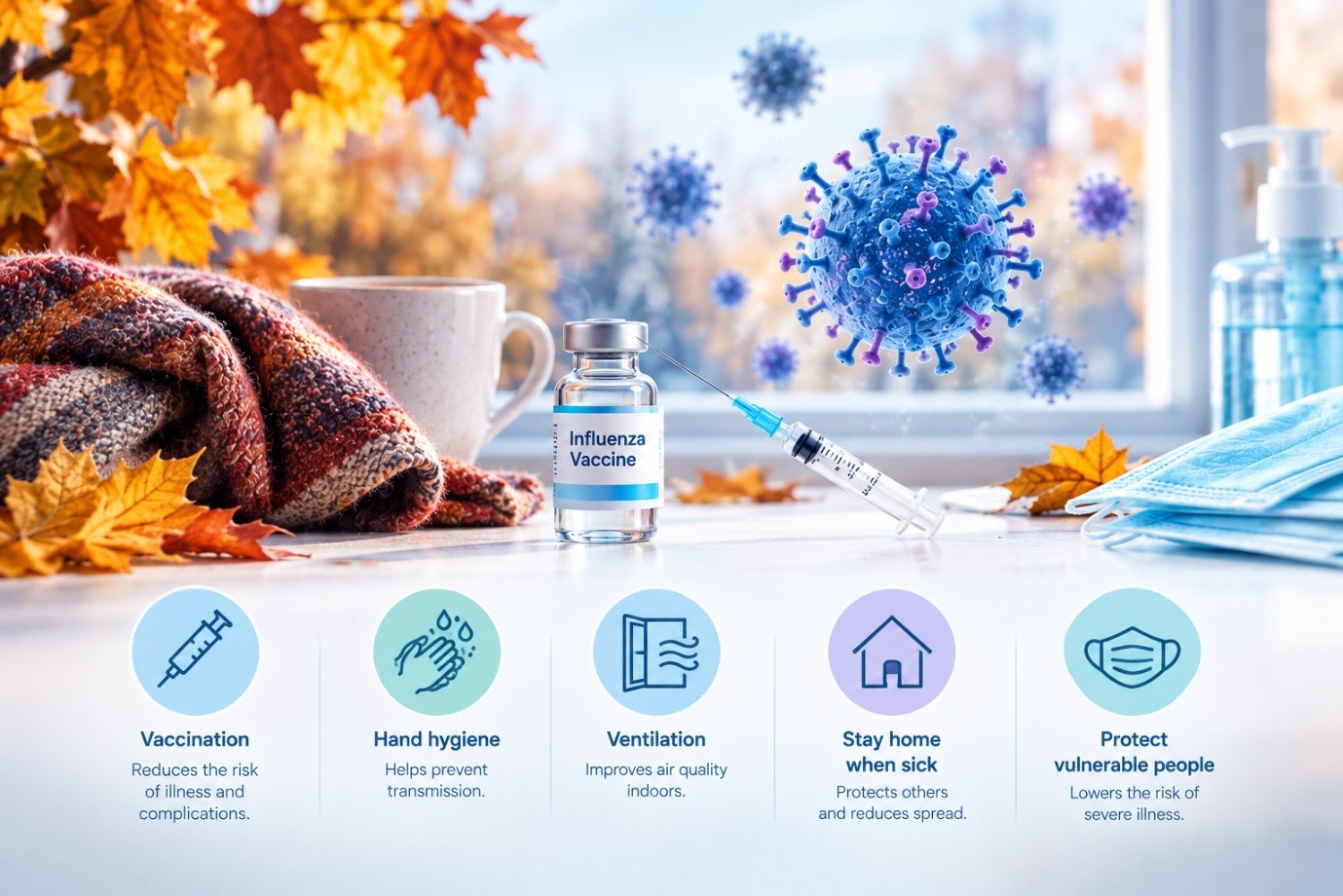
Influenza remains a significant seasonal respiratory infection, but many measures are available to reduce its impact. Vaccination, surveillance, ventilation, hand hygiene, and responsible behaviour when sick all play a role in limiting transmission and protecting vulnerable people. As the new flu season approaches, being informed and prepared can help individuals and communities respond more effectively to the annual return of influenza.
References:
1. World Health Organization. How can I avoid getting the flu? 4 March 2026. WHO – How can I avoid getting the flu?
2. European Centre for Disease Prevention and Control. Timing of influenza vaccination. ECDC ECDC – Timing of influenza vaccination
3. European Centre for Disease Prevention and Control. ECDC urges immunisation and other measures as Europe enters respiratory virus season. 20 October 2025.
4. World Health Organization. Seasonal influenza. 28 February 2025 WHO – Seasonal influenza